Global TimeBeijing--:--:--Dubai--:--:--Moscow--:--:--London--:--:--New York--:--:--Singapore--:--:--
/

INDUSTRY INSIGHTS / ENGINEERING NOTES

Industry information should not just be opinions;
Instead, help project parties ask the right questions.

Here, we organize an engineering reading framework that can be reviewed around industry risks, continuous operation, thermal energy paths, product quality, engineering data and project communication. Please enter the topic starting from the problem you most need to solve at present.

ENGINEERING EVIDENCE WINDOW

The starting point for information should be the equipment, processes and operating conditions that can be reviewed.

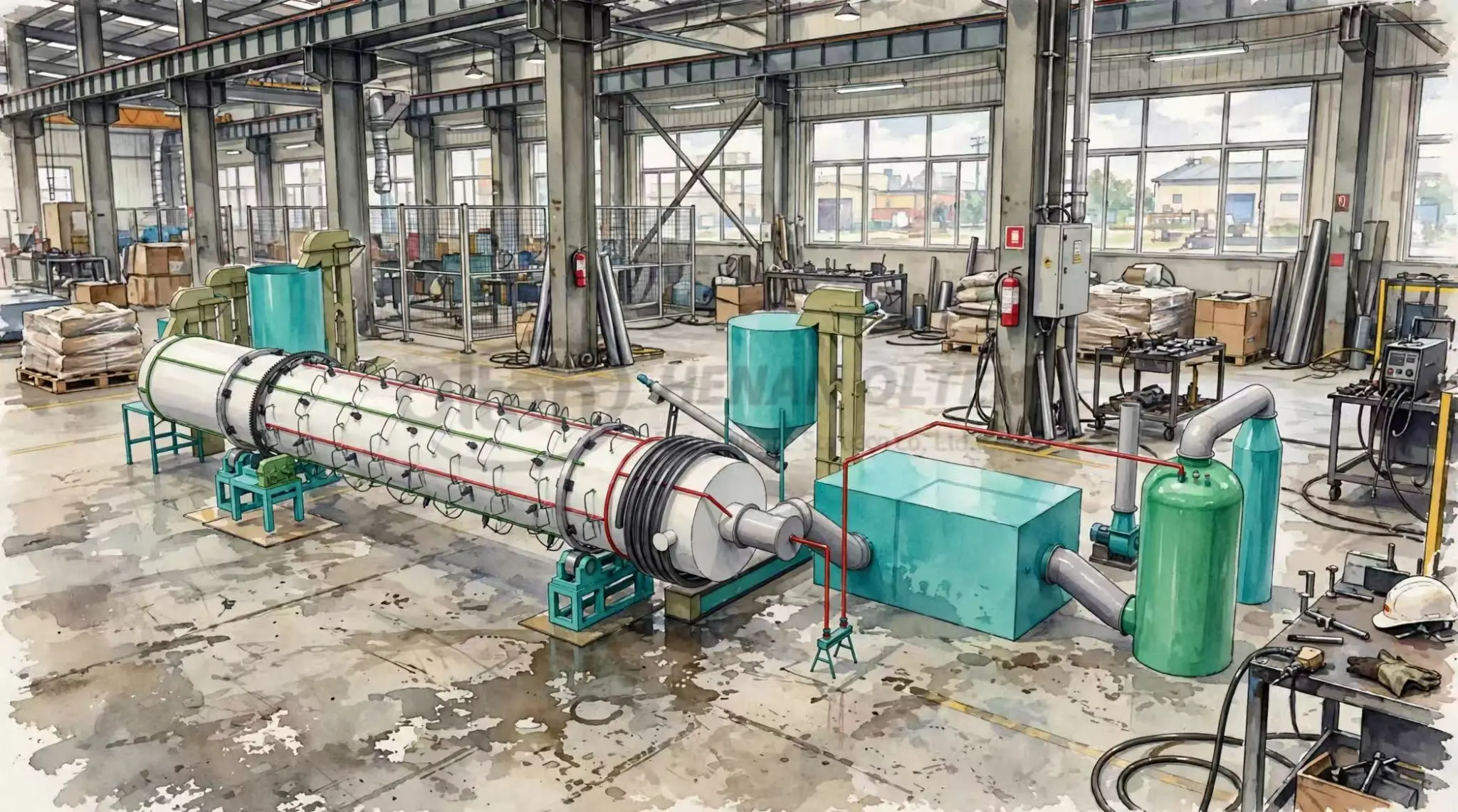
Discussions of continuous pyrolysis, carbonization, activation and thermal energy paths should all return to real materials, thermal boundaries, quality interfaces and maintenance conditions.

Olten Process Equipment Data Window

READING METHOD

Establish project judgment based on questions, conditions, information and next steps.

01Identify industry risks
02Verification system and conditions
03Enter project information communication

01 / TOPIC INDEX

From industry risks to project materials,
Press seven questions to enter the reading.

Each topic is structured with "problems, conditions, information and next steps" to avoid generalized conclusions that deviate from real projects.

The project risks are seen from false continuity, high energy consumption, blockage, heat source utilization and quality stability.

Review the system around sealing, gas path, cooling, maintenance and effective run time.

Discuss project economics with heat sources, run times, products, logistics, and market boundaries.

Answer key questions early in the project, from raw materials, selection, quality to data interfaces.

After identity verification, obtain the reading frame of continuous pyrolysis, carbonization, activation and engineering information.

Check the raw materials, targets and on-site materials recommended to be prepared before entering into project communication.

02 / R&D and Industry Reading

From research and development issues to project judgments,
Establish an engineered industry reading style.

From FEED fluctuations to combustible gas utilization, the thermal logic, sealing status, unobstructed gas path and maintenance path should be checked at the same time when reviewing the system.

01

How does a continuous system put sealing, gas path and uniform heat into the same set of operating boundaries?

From FEED fluctuations to combustible gas utilization, the thermal logic, sealing status, unobstructed gas path and maintenance path should be checked at the same time when reviewing the system.

02

Why does raw material pretreatment determine product quality and subsequent activation conditions?

Moisture, ash, particle size and impurities alter the consistency of the thermal load with the product and are the starting point for all product line discussions.

03

What engineering problems should the waste heat utilization solve first?

Thermal grade, stabilization duration, thermal objects and field interfaces determine whether the thermal energy path can enter the real project model.

04

How does a project begin to collate carbon data with auditable operational data?

From raw materials, temperature, energy consumption, production to product quality, establishing traceable data boundaries is more important than pursuing a single conclusion.

05

How do quality and delivery need to be aligned before carbon products enter into agreement communication?

The product type, inspection method, regional buyer, logistics and delivery scope shall be reviewed in synchronization with the equipment and operating conditions.

06

Why do open materials, protocol deepening, and FEED need to be graded?

The depth of information should be gradually deepened according to the project facts and agreement boundaries to avoid drawing conclusions that have no engineering significance when the information is insufficient.

03 / ENGINEERING FAQ

Ask the engineering questions first,
Then choose a discussion path.

Frequent downtime will result in repeated warm-up, thermal shock, loss of production capacity, quality fluctuations and maintenance costs. This should be reviewed in conjunction with effective operating hours, reasons for downtime, sealing, gas lines, anti-coking, cooling and maintenance strategies.

The FAQ does not simply cover project differences with a simple conclusion; instead, it helps you understand what documents to prepare next and which conditions to verify.

View all project FAQs

Frequent downtime will result in repeated warm-up, thermal shock, loss of production capacity, quality fluctuations and maintenance costs. This should be reviewed in conjunction with effective operating hours, reasons for downtime, sealing, gas lines, anti-coking, cooling and maintenance strategies.

These conditions directly affect pretreatment, FEED stability, heat load, coking risk, product quality and tail gas treatment paths. Project discussions should begin with actual sampling, testing, or traceability data.

It can't be simply confused. They correspond to different raw materials, thermal control, quality indicators, detection methods, downstream applications and delivery requirements; activated carbon also needs to be reviewed around qualified precursors and independent activation paths.

The stable heat source, heat grade, usable time and heat object should be confirmed first. Step paths such as drying, preheating, process heat and steam often need to be discussed before the feasibility of power generation.

04 / Technical White Paper Application

Technical information needs to match the applicant’s
Identity, Purpose and Project Phases.

After submitting your personal and business information, project background and reading purpose, the Olten team will review the identity and profile suitability. For applications that pass the review, the team will send the corresponding white paper information by email; direct downloading is not available on this page.

05 / Project Documentation Request

Prepare project materials to bring the next communication closer to the real scenario.

Please provide raw materials, scale, target products, project location and current on-site conditions. Based on this, Olten will confirm the scope of data that can be accessed, the pace of communication, and whether it is necessary to enter the design development or FEED design stage.

If you are evaluating equipment, project investments, waste heat utilization, product pathways, or engineering collaborations, you can submit existing raw material, site, product, and market information. The more complete the information, the clearer the communication.

WhatsApp Instant Consultation