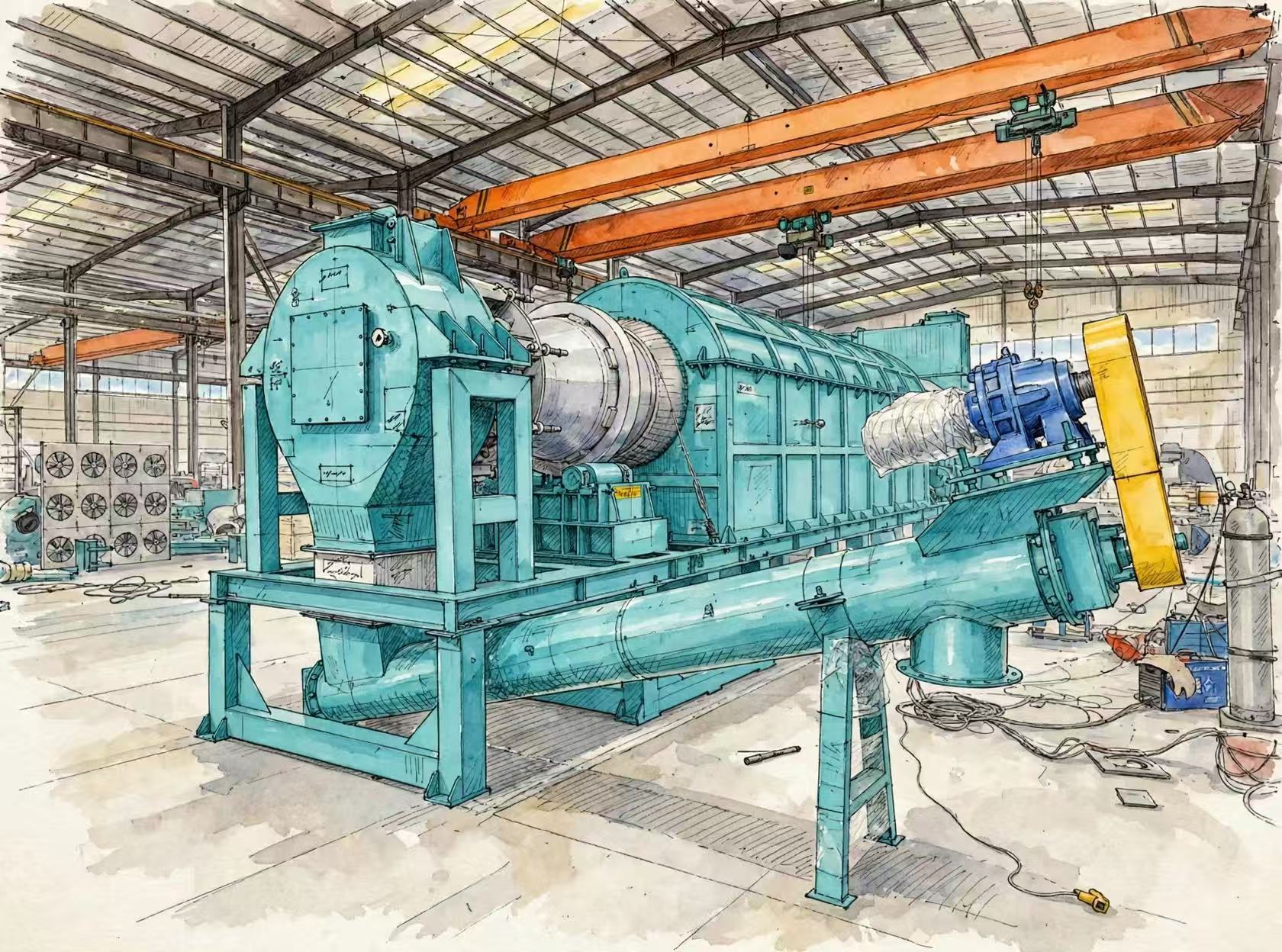
ENGINEERING EVIDENCE / CONTINUOUS THERMAL SYSTEM
01 / OLTEN PHILOSOPHY
In the process of biomass pyrolysis, traditional carbonization equipment often treats the combustible gases and thermal energy generated by pyrolysis as by-products or even waste for simple disposal. This underlying design logic, at its root, limits the performance ceiling of the system in terms of energy efficiency, operational stability, and long-term sustainability.
02 / SYSTEM POSITION
ENGINEERING EVIDENCE / CONTINUOUS THERMAL SYSTEM
03 / CORE ENERGY ROUTES
Olten did not simply add gas and waste-heat recovery auxiliary modules to traditional carbonization equipment; instead, at the system-architecture level, it redefines the value and roles of the various forms of energy in the pyrolysis process.
The combustible gas generated by pyrolysis is stably collected and accurately controlled, and controlled release of energy is achieved through an independent combustion system, providing a continuous and stable heat source supply for the entire device.
The system completes the global heat distribution planning at the beginning of the design; the heat energy in each link is directed into functional modules such as raw material drying, reaction maintenance, and system assistance, preventing heat from staying in paths with no clear purpose.
The design goal is not only to put the equipment into production in the short term, but also to establish the system boundaries required for continuous production for gas volume fluctuation control, dynamic adjustment of heat load and convenience of maintenance of key modules.
04 / PROJECT FIT BOUNDARY
Olten's solutions are not a fit for every business scenario. Because project objectives, investment boundaries, and operating lifecycles differ, the technology path should be chosen to match them.
WHEN A SIMPLE ROUTE FITS
WHEN OLTEN FITS
NEXT / PROJECT CONDITIONS